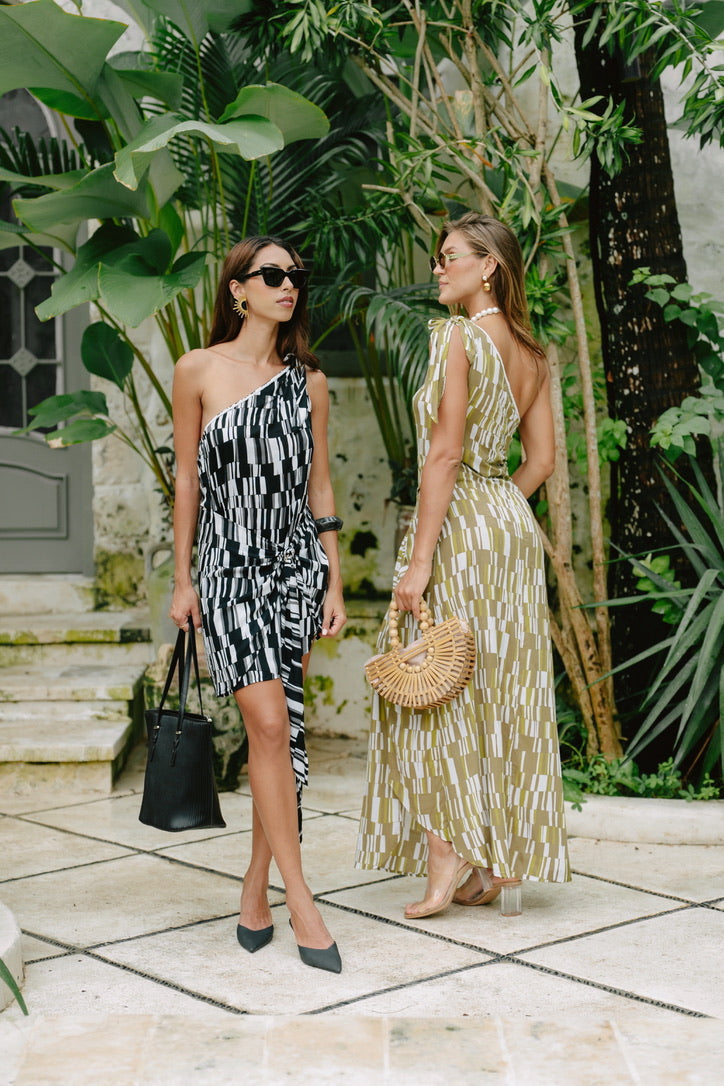
Handcrafted Versus Machine Made Clothing Compared
A kaftan can look effortless as it moves from a late breakfast by the sea to candlelight on the terrace. Yet the ease you feel in a garment often begins long before you wear it: in the hands that placed its embroidery, adjusted its print, or finished its fringe. Handcrafted versus machine made clothing is not simply a question of old-world charm versus modern convenience. It shapes the character, comfort, longevity, and story of the pieces you pack for summer days and island nights.
For women who choose expressive resort wear, the distinction matters because detail is part of the experience. A sun-washed print, a hand-finished neckline, or a trail of lace along a fluid hem can turn a dress into something personal. Still, neither method is automatically better in every case. The best choice depends on what you value, how you plan to wear the piece, and what quality looks like to you.
Handcrafted Versus Machine Made Clothing: The Real Difference
Machine-made clothing is produced with industrial equipment that repeats the same task quickly and consistently. Fabric may be cut in stacked layers, seams sewn at speed, and prints applied according to a tightly controlled production process. This can create dependable sizing, clean construction, and accessible pricing, particularly for everyday essentials made at scale.
Handcrafted clothing involves skilled human work at one or more significant stages. Depending on the garment, that may mean hand screen-printing, hand dyeing, embroidery, beadwork, lace application, fringe placement, finishing, or carefully assembling a piece in smaller runs. “Handcrafted” does not always mean every stitch is made by hand. In fashion, it more often describes a thoughtful blend of artisan techniques and professional garment construction.
That blend is worth understanding. A flowing dress may use machine stitching for strength and consistency while its pigment print, embroidery, or decorative finish is completed by hand. The result is not a rejection of modern craftsmanship. It is a garment with a more human rhythm in the details.
The beauty of variation
A machine is designed to make sameness. An artisan’s hand naturally leaves small variations in color placement, stitching, texture, and finish. In a tie-dye tunic or mandala-print kimono, these nuances can be part of the beauty rather than a flaw. They make the piece feel lived-in from the first wear, like a small treasure found on a faraway island market.
This does require a shift in expectations. A handcrafted print may not align with mathematical precision from one garment to the next. The embroidery on two blouses may sit with subtle differences. If you want every item to be visually identical, machine production has the advantage. If you love a piece because it has its own spirit, variation becomes part of its value.
What You Can Feel When You Wear It
The distinction is often most visible in decorative resort wear. Machine-made embellishment can be neat, regular, and efficient. It works beautifully when a design calls for precise repetition or a sleek, minimal finish. But it can also feel flat when a garment’s entire appeal rests on surface detail.
Handwork gives texture a sense of movement. A line of embroidery follows the curve of a neckline. Fringe has a softer, less uniform fall. A hand-applied trim catches the light differently as you walk. These are small gestures, but they matter in a moonlit beach restaurant or at a festival where clothes are part of the atmosphere.
Drape matters, too. The way fabric is cut and finished affects how a maxi dress falls over the body and how a kimono moves over swimwear. Handcrafted detail does not guarantee better drape on its own, but artisan-led production often encourages closer attention to placement. A print can be positioned to flatter, or a border can be considered in relation to the hem rather than treated as an afterthought.
For the traveler, this can make a garment more versatile. One expressive, beautifully finished layer can carry a simple slip dress from daytime exploring to an evening gathering. A blouse with intricate sleeves needs little else beyond relaxed trousers and gold jewelry.
Price, Time, and the Value Behind the Label
A handcrafted piece generally asks for more of your budget because it requires more time, specialized skill, and smaller production runs. That does not mean every higher-priced garment is worth the investment. Luxury language alone is not proof of quality. Look beyond the word “artisan” and ask what was actually made by hand, how the garment is finished, and whether the fabric and construction support the price.
Machine-made clothing can offer real value, especially for wardrobe foundations you wear hard and wash often. There is no need to romanticize every handmade detail or dismiss technology. Well-made machine production can be durable, beautifully cut, and practical for daily life.
The difference becomes clearer when you consider cost per wear. A statement dress that only works for one photograph may not earn its place in your suitcase. But a handcrafted kaftan that works over a swimsuit, with sandals for lunch, and with heels after sunset may become a piece you return to season after season. Its value is not only in the hours spent making it. It is in the number of memories it can join.
A more considered pace, with no false promises
Handcrafted production often sits naturally within a slower fashion mindset. Smaller batches can reduce the pressure to produce endless quantities, and artisan techniques can preserve valuable skills. At Hippy Chick Ibiza, handcrafted details are part of an Ibiza-born approach to dressing that celebrates color, movement, and individuality.
But responsible fashion deserves honesty. Handmade does not automatically mean low-impact, fair-priced for every worker, or made from sustainable materials. Machine-made does not automatically mean careless. Fabrics, dye processes, wages, workplace conditions, shipping, packaging, and how long you keep a garment all matter.
The most thoughtful question is not, “Is this handmade?” alone. Ask whether the brand communicates clearly about its materials and making, whether the workmanship invites long-term wear, and whether the piece suits your actual life. A garment made with care should be cared for in return.
How to Spot Clothing Made With Care
You do not need to be a tailor to assess a garment. Start with the details your hands can find. Turn the piece inside out and look at the seams. They should feel secure, without loose threads pulling at stress points. Check that linings, trims, and lace lie flat rather than twisting away from the fabric.
Then look at the design as a whole. On a printed dress, does the pattern appear intentionally placed? On an embroidered tunic, are the motifs balanced around the neckline and sleeves? Does the fabric feel suited to the silhouette, with enough movement for a beach cover-up or enough body for a dress meant for dinner?
For hand-dyed or pigment-printed pieces, expect character, but inspect for quality. Colors should feel deliberate and rich rather than patchy in an accidental way. Decorative elements should be firmly attached. If fringe or tassels are part of the design, gently check that they are secure before the first wear.
Care instructions are another quiet clue. A special piece may need a gentler wash, cool water, or drying away from direct sun to preserve color and shape. That is not necessarily inconvenient. It is simply part of owning clothes made for more than one fleeting season.
Choosing the Right Piece for Your Wardrobe
Choose machine-made clothing when you want dependable basics, precise uniformity, or a practical piece for frequent, carefree wear. Choose handcrafted clothing when you are drawn to texture, expressive print, meaningful detail, and the pleasure of owning something that will not look exactly like everyone else’s.
Many wardrobes need both. A simple, well-cut base lets an artisan-made kimono, embroidered blouse, or celestial-print dress take center stage. The goal is not to make every hanger tell the same story. It is to choose pieces that feel right under your skin, travel well with your life, and make getting dressed feel a little more like an escape.
Before your next trip, imagine the garment in motion: salt in the air, warm pavement beneath your sandals, the last gold light settling over the water. Choose the piece you will reach for not because it is perfect, but because it feels unmistakably yours.